

Learning from our peers is so important as we grow, so we can find inspiration, learn from what’s gone well (and what’s not gone well!) for them, and avoid doubling up on work that could be shared.
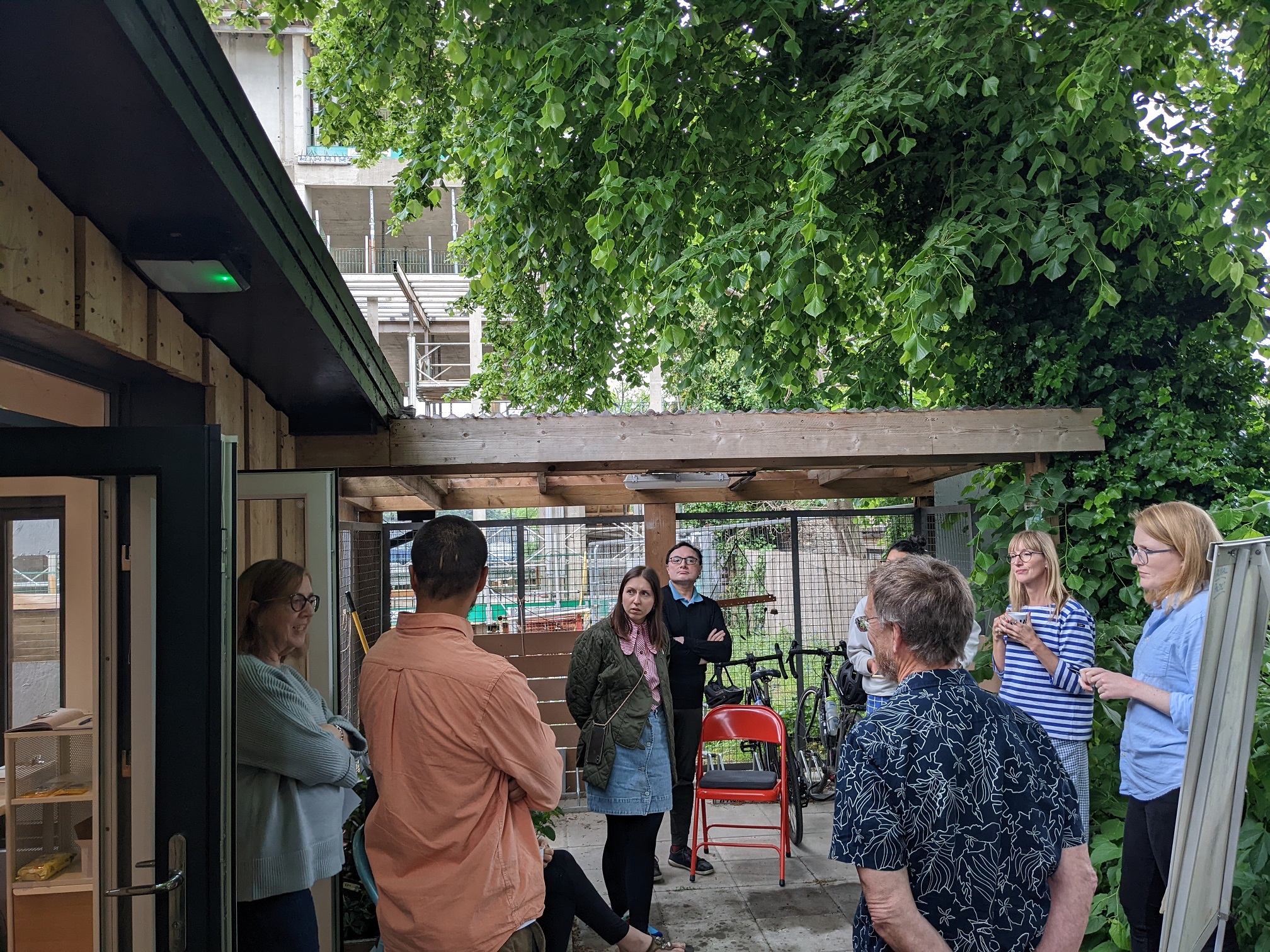
Earlier this year we organised two roundtable discussions to do just this.
We invited CLTs and other community-led housing organisations from across London to meet and network, discuss their latest projects, and learn from each others’ challenges and opportunities. We hosted these sessions in collaboration with Community Led Housing London, and we ran the sessions at Rural Urban Synthesis Society (RUSS)’s community hub which is next to their first housing project in construction in Lewisham. We were thrilled to welcome representatives from RUSS, London CLT, Brent CLT, Squeezed London, E16 CLT, NW3 CLT, Crystal Palace CLT, and Earlsfield CLT.
It was so inspiring to hear about all the incredible work happening across these organisations, and how much time and passion is put into it by trustees and members. We learned so much from the sessions, and want to share some of the key points with you all!
Here’s what we learned from our first session, which focussed on setting up and establishing an organisation, and preparing to secure the first site for build.

Finding your ‘unique selling point’ (USP)
When first setting up your CLT it is important to find your USP, considering what makes you different from others, and what might encourage members, stakeholders, and investors to choose you over them. This of course varies according to how and why a CLT is formed.
- Affordability was a big priority for everyone present, but it was defined differently from scheme to scheme (e.g. pegged to average local incomes vs a percentage of local property prices).
- Recognising the absence of affordable housing in their area was true for all, and many saw themselves as representatives of residents who are at the sharp end of regeneration.
- Quality of development is important, but that is always balanced with affordability and what makes a viable scheme, as well as what sorts of sites a local Council is willing to offer.
- Being rooted in and representative of your community is key in differentiating CLTs from other home providers like Housing Associations. Emphasising community ownership and governance is an important USP when pitching to local authorities.
Building your membership
Here we discussed the pros and cons of:
- Engaging and growing a membership as wide as possible, from the start, to get the attention of local authorities and demonstrate the strength of community feeling about housing. However, a large group is likely to only have a small number of active members who are willing to support the CLT.
- Defining and working up a scheme with a small group of highly involved people. With this approach you will struggle to prove your numbers to future stakeholders, but could make quicker progress with clear roles and responsibilities.
Whichever approach you take, we discussed:
- Being clear on your ‘target audience’ and you can work out an effective approach (messaging, channels etc) from there.
- The dangers of disengagement and high turnover if site bids continually fail and relationships with councils wear thin – lack of progress can be frustrating.
- Needing to consider the capacity of members and avoid burnout.
- Active communication with members – whether that’s through newsletters, meetings, or events – with focus on how they can get involved, to achieve a ‘return on investment’ from CLTs’ efforts to engage.
- Caution on ‘representing’ the community and assuming knowledge – CLTs are a proxy for the community at best, and need to commit to regular listening exercises to build their knowledge.
Finding your site
The group explained lots of different approaches to identifying and finding potential sites for building:
- Bidding for small sites that councils offer up for community-led housing development – often ‘difficult to develop’ sites
- Using own knowledge using tools such as Land Insights, and working with a strategic development partner, an existing developer, or just themselves to structure a proposal for sites
- Using local knowledge, working with the community, and ‘hitting the pavement’ to keep an eye out for opportunities
- Building networks with landowners such as Transport for London and churches, including bringing their own sites to them in a new light, e.g. offering alternative approaches to past failed planning applications
- Working with local authorities to identify neglected council assets and regenerate them

Working with councils and other landowners
Some frustrations were shared here, on past experiences with supportive words not being matched with effective action from councils. High turnover of responsible staff can cause a lot of re-introductions and repetition, although it was recognised that this can go both ways as some CLTs also experience high turnover.
To improve these relationships we considered how we could align our ambitions with our respective local authorities. This could include helping them to identify opportunities to maximise use of their sites, and offering them a unique badge of pride that puts them ahead of other councils in the creation of sustainable communities. An ideal combination would be Councillors and Mayors with the political intent to support, officers being willing and able to follow through, and a CLT with a clear plan and capacity to deliver.
Next steps
We loved meeting our peers across London and want to stay connected with them through our CLT journey. Working together across London will empower us to make more of an impact in our communities.
You can read the full report from the first roundtable here, and stay tuned for our second session’s summary – coming soon!